


all the 2016 trends I’m missing a decade later
- Jan 26
- 3 min read
When I think about 2016 from my life in 2026, it’s wild how familiar it suddenly feels — the background playlist in my head immediately goes to songs like Closer by The Chainsmokers, 7 Years by Lukas Graham, Shape of You by Ed Sheeran, Work by Rihanna, or Cheap Thrills by Sia. These songs played everywhere when I was just starting to become an adult. La Bicicleta by Carlos Vives & Shakira and Hasta el Amanecer by Nicky Jam became summer anthems that still sound like nostalgia on repeat.
Back then, I wore skinny jeans (maybe with a patch on the pocket) with Dr. Martens, a white Abercrombie & Fitch T-shirt, an oversized Hollister cardigan (only if someone I knew had been to New York, of course), and I used Instagram’s chronological feed, Snapchat with all its filters, and rocked Californian highlights instead of a trendy bob. And to be honest, even though I didn’t realize it at the time, I was living and wearing what later would be called “trends.”
That feeling of just being a part of something without knowing it — that’s now unattainable in 2026. That’s exactly why the phrase “2026 is the new 2016” has taken off — not because we want a literal repeat of the past, but because we miss the shared sense of culture without overthinking it.
Back in 2016, doing something like getting dressed, choosing what music to listen to, or posting a photo online wasn’t loaded with identity politics, ethics, or ideological messages — it was simply a choice, a gesture without an ulterior motive. Fashion worked like a common language: no translation needed. Sneakers like Isabel Marant’s Beckett were everywhere — simple, comfortable, and just looked good. Nobody questioned why someone wore leather-effect leggings or a bomber jacket — we just did.
Today, everything seems to demand a backstory — quiet luxury vs. loud logos, minimalism vs. maximalism, health drink vs. coffee — every choice feels like a statement. But in 2016, clothing didn’t mean anything other than what it was. And in 2026, that simplicity feels revolutionary again.
What I remember from 2016
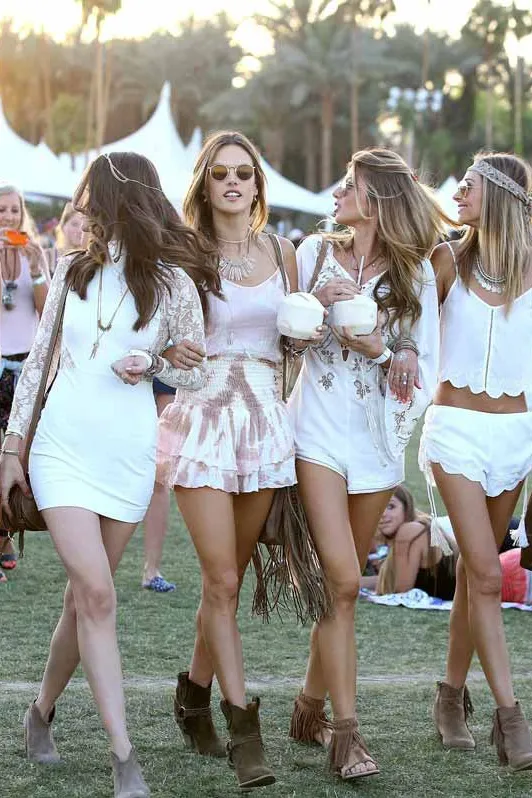
– 2016 kicked off the athleisure era — wearing sporty clothes outside the gym became normal. Every influencer (including me at the time) looked to California style, where Coachella was the unofficial runway: fringe kimonos, Levi’s 501 shorts, chokers, crochet tops, and Dr. Martens booted alongside flower crowns and feather extensions.
– I remember Forever 21, Topshop, Adidas Originals, and Supreme as the brands I saved up for — they were objects of desire for many of us in Gen-Z. And designers like Alessandro Michele at Gucci, Phoebe Philo at Céline, or Fendi’s statement moments were shaping fashion in a big way.
– Celebrities didn’t have the hyper–strategized online personas they do now. Victoria’s Secret Angels like Adriana Lima and Alessandra Ambrosio personified beauty ideals, and figures like Alexa Chung or Cara Delevingne seemed authentic— photographed with messy hair or an oversized coat without it feeling calculated. Influence back then was measured in affinity, not metrics.
Beauty in 2016 wasn’t just about trends — it was a promise of a carefree life: pink dyes, Californian highlights, soft beachy waves, and bold brows. The Kardashians were turning even ordinary makeup moments into moments everyone wanted to copy — from sculpted eyebrows to glowing highlighter and sold-out Kylie lip kits.
Why 2016 makes me nostalgic
When I reflect on why I feel this nostalgia now, I realize it’s not because I want to go back in time literally. It’s more like I crave the calm, the lack of constant pressures, the ease of being without overanalyzing every choice. In 2026, every image, every outfit, everything we share feels charged — it’s supposed to mean something. But back then? We just were.
Ironically, while 2016 wasn’t politically calm — with events like Brexit, Trump’s election, attacks in Europe and two general elections in Spain — there was a paradox: even as the world was shaking, culture still felt light and free. Looking back from 2026, I see 2016 as a hinge year: the last moment when we thought big world events were exceptions, not signs of a changing world.
Now, when it seems like even a plain white T-shirt has something to say, that effortless carefree vibe from 2016 doesn’t feel naive anymore — it feels like a true luxury. And that’s why, to me, 2016 isn’t gone — it’s back, not as repetition but as a feeling we genuinely miss.
Comments